

The 2026 Glassman Symposium will be held October 29-30.

Honoring Outstanding Student and Faculty, and Alumni Research in Behavioral and Life Sciences
The Brain Awareness Week Faculty/Student Symposium was renamed the Robert B. Glassman Memorial Brain, Mind, and Behavior Symposium in 2013 in honor of the late Professor of Psychology Robert Glassman, who played a leading role in developing Lake Forest’s popular neuroscience major.
The symposium consists of a series of talks given by Lake Forest College faculty and alumni on October 30 and a poster session where Lake Forest students and alumni will present their original research on October 31.
October 29 — Faculty/Alumni Talks
7–9 p.m., Tarble Room, Brown Hall
6:30 p.m. Reception
7:00 p.m. Welcome Remarks, Synapse
 Charles Alvarado ’16, PhD in Educational Psychology
Children Maltreatment Solutions Network, Department of Education, Penn State University
Looking Beyond the Page: The Role of Childhood Adversity in Learning To Read
7:05 p.m.
 Emily Dix, PhD
Assistant Professor of Psychology, Lake Forest College
Understanding the Recognition vs. Denial of Racial Discrimination
7:25 p.m.

Trevor Buhr ‘18, PhD in Neuroscience, Iowa State University
Postdoctoral Fellow, Department of Molecular Pharmacology and Therapeutics, Loyola Stritch School of Medicine
Investigating the Neurophysiological Underpinnings of Stress-Induced Physical Inactivity
7:45 p.m.

Elisabeth Bacon ’19, PhD candidate in Neuroscience
Neuroscience Program, University of Illinois Urbana-Champaign
The Long and the Short of It: Neurons That Run Together Longer, Communicate Stronger
8:05 p.m.

Sugata Banerji, PhD
Associate Professor of Mathematics and Computer Science, Lake Forest College
Artificial Imagination: Teaching Computers to Dream
8:25 p.m.
8:45 p.m. Closing Remarks, Synapse
Friday, October 30 — Undergraduate and Alumni Research Poster Session
Read the poster session abstracts
4:00 - 6:30 p.m., Calvin Durand Hall, Mohr Student Center
4:00 p.m. Chicago Society for Neuroscience Reception
4:30 p.m. Welcome Remarks and Unveiling of Annual Neuroscience Sculpture
4:45 - 6:10 p.m. Poster Viewing
Enjoy posters and exhibits by current students and recent alumni of original student/faculty research conducted at Lake Forest, Rosalind Franklin University of Medicine and Science, and several other Chicago area research universities and beyond.
6:10 p.m. Closing Ceremony
Introduction, Nu Rho Psi
Closing Remarks for Brain Awareness Week and Glassman Symposium
Recognition of student scholars and celebratory photo
Glassman Symposium News
November 05, 2026
Exploring the brain through science and art at the Glassman Symposium

October 03, 2025
Glassman Symposium to showcase faculty, alumni, student research


November 08, 2024
Brain Awareness Week, Glassman Symposium draws interested crowds
2026 Student and Alumni Poster Abstracts
Alumni Abstracts
Spatial profiling of the ALS CNS cellular mechanisms and pathology via highly multiplexed immunofluorescence and AI-driven image analysis.
Anait Nalbandian ’24, Jake Boles, David Gate, The Ken & Ruth Davee Department of Neurology, Northwestern University Feinberg School of Medicine, Chicago, IL 60611
Amyotrophic lateral sclerosis (ALS) is a progressive neurodegenerative disease marked by the death of upper and lower motor neurons. ALS is clinically heterogenous, with motor deficits presenting at different sites. Further, motor neuron death may be affected by intrinsic, extrinsic, and genetic mechanisms. Understanding microenvironments and cellular processes influencing motor neurons in ALS is essential to understanding these disease mechanisms and developing potential therapies. As such, we have developed a workflow which combines highly multiplexed immunofluorescence (HMIF), visualizing over 60 proteins in the ALS central nervous system (CNS), with artificial intelligence (AI)-driven image analysis. Using our HMIF workflow in human motor cortex and spinal cord samples from 14 ALS patients and 10 neurologically healthy controls, we identify neurons, microglia, oligodendrocytes, astrocytes and peripheral immune cells along with pathological features of ALS and other neurodegenerative diseases, including phosphorylated TDP-43, C9orf72-derived protein aggregates, amyloid-beta plaques, and tau tangles using AI image segmentation tools. This approach allows us to quantify various protein markers across cell types and relate cellular protein abundance to pathology, generating a multidimensional spatial map of the ALS CNS. We have been able to build classifying models to thoroughly identify and subtype microglia by marker expression and spatial features. Additionally, this method helped us identify neurons exhibiting ALS pathology and study the pathology burden. Overall, the machine learning algorithms enabled us to quantify spatial relationships between cell types and pathology and uncover cellular and spatial niche changes in ALS. A combination of HMIF, high-dimensional image analysis, and AI-boosted spatial analyses allows us to thoroughly profile the pathology and cellular features in the ALS CNS. This novel spatial biology approach provides new insight into the cellular mechanisms mediating motor neuron death in ALS.
Exploring the role of PTEN as a substrate for PRL2 in NOTCH1 driven T-cell Acute Lymphoblastic leukemia (T-ALL)
Ama Owusu-Ofori ’241, Tiffany Sharma, PhD1,Shiyu Xiao, PhD2, Yan Liu, PhD2, Loretta S. Li, MD1,2
1Molecular and Translational Cancer Biology Neighborhood, Stanley Manne Children’s Research Institute, Ann & Robert H. Lurie Children’s Hospital of Chicago; 2Department of Pediatrics, Division of Hematology, Oncology and Stem Cell Transplantation, Northwestern University Feinberg School of Medicine
T-cell lymphoblastic leukemia (T-ALL) is an aggressive cancer that affects the blood, bone marrow and affects T-cell development. T-ALL represents 12-15% of all newly diagnosed pediatric ALL cases. While most children can get cured from T-ALL through multi-agent chemotherapy, approximately 10-15% still die from relapsed disease. The phosphatase of regenerating liver 2 (PRL2) plays an important role in stem cell proliferation and self-renewal through SCF/KIT signaling. PRL2 is highly expressed in T-ALL cells, and has been shown to dephosphorylate PTEN, a tumor suppressor gene, at tyrosine 336 which facilitates PTEN ubiquitination and proteasomal degradation, enhancing the activity of the PI3K/AKT pathway. In 50-70% of all T-ALL cases, NOTCH1, an oncogene, is constitutively active. PRL2 plays a significant role in both the initiation and maintenance of NOTCH1 induced T-ALL. We hypothesize that PTEN is a direct substrate of PRL2 in T-ALL, and PRL2 facilitates the development of T-ALL by inhibiting the PTEN tumor suppressor pathway and activating PI3K/AKT signaling. To test our hypothesis, fetal liver cells from Prl2+/+ Pten+/-, Prl2+/+ Pten+/+, Prl2-/- Pten+/-, and Prl2-/- Pten+/+ C57BL/6 mice will be transduced with NOTCH1-ICN1 retrovirus and transplanted into recipient mice. We will then assess engraftment 19 days post-transplant and compare overall survival across the four groups of mice. Spleen and bone marrow samples will be collected from moribund mice and analyzed through Western blotting to evaluate the PI3K/PTEN/AKT signaling pathway. In addition, we will use shRNA to knockdown PRL2 in human T-ALL cell lines and confirm knockdown through Western blotting and quantitative real-time PCR (qRT-PCR). We will then assess the effect of PRL2 knockdown on PTEN expression and the downstream PI3K/AKT/mTOR signaling cascade. We anticipate that the median overall survival across the groups will be Prl2+/+ Pten+/- < Prl2+/+ Pten+/+ < Prl2-/- Pten+/- < Prl2-/- Pten+/+. In addition, we anticipate that PRL2 knockdown will be associated with increased PTEN phosphorylation and reduced PI3K/AKT signaling.
Investigation of SOD1-Mediated Degeneration and Optimization of C. elegans Cholinergic Neuron Degeneration Assay
Leslie Diaz Casares ‘26, Marissa J. Maroni, Lexi-Amber Hassell, and Anne C. Hart, Division of Neuroscience, Brown University, Providence, RI 02608
Amyotrophic lateral sclerosis (ALS) is a progressive, fatal neurodegenerative disease characterized by the loss of upper glutamatergic and lower cholinergic motor neurons, resulting in muscle atrophy. Patient variants in the SOD1 gene are responsible for 15 to 20% of cases of known genetic origin. Despite these genetic links, the cellular mechanisms underlying neurodegeneration remain poorly understood. Previously, we found that sod-1 patient variants in C. elegans ALS models cause stress-induced cholinergic and glutamatergic neurodegeneration through gain-of-function and loss-of-function mechanisms, respectively. This project has two primary aims: (1) characterize genetic modifiers of cholinergic and glutamatergic neurodegeneration, and (2) optimize existing cholinergic neurodegeneration assays to improve reproducibility. To assess stress-induced glutamatergic neurodegeneration, animals were treated with paraquat, an oxidative stressor, followed by a retrograde dye that stains only intact glutamatergic neurons. To evaluate stress-induced cholinergic neurodegeneration, we utilized a cholinergic neuron reporter (unc-17p::GFP) and paraquat treatment. We found that some genetic modifiers modulate either glutamatergic neurodegeneration, cholinergic neurodegeneration, or both. For optimizing the cholinergic neurodegeneration assay, we found that certain parameters influence the level of sensitivity of the assay, such as the concentration of paraquat, the type of paraquat treatment, and the length of time on the paralyzing agent, 2,3-Butanedione 2-monoxime (BDM). This study dissects mechanisms that underlie glutamatergic and cholinergic neuron degeneration and optimizes an existing C. elegans cholinergic neurodegeneration assay to better assess sod-1 ALS phenotypes and isolate potential targets.
Student Abstracts
Behavioral Recovery Following Surgical Isolation of the Pedal Ganglia in Aplysia californica
Asad Ali ’28 and Dr. William N. Frost, Department of Cell Biology and Anatomy, Rosalind Franklin University of Medicine and Science, North Chicago, IL 60045
The adult nervous system often exhibits some regenerative ability following severe injury. The marine snail Aplysia californica provides a valuable model for investigating mechanisms of such neural repair due to its simple nervous system and capacity for functional recovery. This study examined whether behavioral recovery following complete transection of the pedal-cerebral and pleural-cerebral connectives can be attributed to axonal regeneration. Animals were assigned to control, sham (incision with no transection), and surgery (transection of connectives) groups and then underwent several behavioral assessments, including head reach latency, locomotion cycle duration, and bite latency. After about one and a half months of assessment, animals of the surgery group were dissected and examined for evidence of axonal regeneration. Behavioral data was analyzed to examine significance in recovery within the surgery group as well as between all groups to determine whether behavioral improvements were unique to the surgery group. Evidence of regeneration was not observed in any animal, indicating that recovery may be attributed to alternative methods of neural plasticity. Overall, this work contributes to the growing understanding of cellular mechanisms underlying functional recovery after CNS injury and may provide insights towards neural repair in more complex models.
Distinct Patterns of Microglia Activation Following Repeat Traumatic Brain Injury Contribute to Alzheimer’s Disease Pathology
Lia Alterson ‘27, Danielle Leserve, Elise Webber, Nikki Barrington, and Grace Stutzmann, Center for Neurodegenerative Diseases and Therapeutics, Rosalind Franklin University of Medicine and Science, North Chicago, IL 60045
Traumatic Brain Injury (TBI) is a leading risk factor for Alzheimer’s disease (AD). Both of these conditions can contribute to a wide range of cognitive and behavioral deficits. One factor known to modulate neuroinflammation in both TBI and AD is microglia. While repeat TBI (rTBI) is well associated with the development and progression of AD pathology, the specific patterns of microglia activation contributing to this process remains poorly understood. In this study, we investigated the effects of rTBI on AD pathology and microglial activation in 3xTg-AD and non-transgenic mice. We hypothesized that rTBI produces distinct patterns of microglial activation in the 3xTg-AD mouse model, contributing to the development and progression of AD pathology. To test this hypothesis, we used immunohistochemistry to assess key features of AD pathology, including amyloid-beta plaques and hyperphosphorylated tau, as well as markers of microglia activation. We also analyzed single-cell RNA sequencing data to examine patterns of gene expression in microglia and determine how these patterns correspond with our histological findings. Collectively, these findings advance our understanding of how microglial activation following repeat traumatic brain injury contributes to the development and progression of AD pathology.
Exploring the mechanisms of the SARS-CoV-2 accessory protein Orf7b in down regulating MHC-I surface expression
Anais Azevedo ’26, Khushi Tekale and Najla Arshad, Department of Microbiology and Immunology, Rosalind Franklin University of Medicine and Science, North Chicago, IL 60045
The immune system plays a critical role in protecting the body from viral infections by recognizing and eliminating infected cells. One important component of this defense is major histocompatibility complex class I (MHC-I), which presents viral antigens on the cell surface for recognition by T cells. However, many viruses have evolved mechanisms to evade immune detection by disrupting MHC-I antigen presentation somewhere along the pathway. SARS-CoV2, the virus responsible for COVID-19, encodes several accessory proteins that contribute to immune evasion. Previous studies have shown that the accessory protein Orf7a reduces MHC-I surface expression and impairs antigen presentation. More recently, Orf7b has also been reported to decrease MHC-I surface expression, but the mechanism responsible for this effect remains unknown. We sought to investigate how Orf7b contributes to MHC-I downregulation in human cells. Human cell lines including HEK293T, HeLaM, and MDA-MB-231 were transiently transfected with an Orf7b-FLAG expression plasmid. Flow cytometry and FlowJo analysis were used to measure surface MHC-I expression, while western blotting was performed to confirm Orf7b-FLAG protein expression. To determine whether the FLAG tag influenced Orf7b function, an untagged Orf7b construct was generated through PCR amplification, restriction enzyme digestion, and Gibson assembly.
Arm-Based Haptic Feedback Enables Intuitive Object Perception in Absence of Vision
Paul Benjamin ‘28, Frederick R Prete, Biology Department, Lake Forest College, Lake Forest, IL 60045
Approximately 8.6 million North Americans are blind or low vision (B/LV), and 1.5-2.0 million rely on mobility aids. Haptic vibrations, which stimulate somatosensory receptors, are widely used in consumer devices and can indicate object proximity. We explored implementing haptic stimuli in a hands-free, arm-mounted assistive device using an MB1040 LV-MaxSonar-EZ4 distance sensor (20Hz) and a Precision Microdrive ERM vibrating motor driven by a DRV2605 chip. In Experiment 1, subjects (N=14) reported perceived distance of a 12”x16” card at upper-arm height, placed randomly at five distances (<1, 1-2, 2-3, 3-4, and >4 ft) to their left or right. Each distance was assigned a predetermined haptic stimulus intensity that negatively correlated with object distance (100%, 82%, 65%, 35%, and null, respectively). Pre- and post-tests, separated by an unsupervised familiarization period in which subjects were allowed to walk around wearing the mobility device, did not differ. Users’ distance perceptions were strongly correlated with stimulus intensity (R² = 0.977, n = 5, p < 0.001), indicating reliable discrimination of object proximity based on haptic intensity. In Experiment 2, we integrated an Inertial Measurement Unit (IMU) LSM6DO32 accelerometer to the mobility aid to constrain feedback when the subject is stationary. Acceleration values across five 1-minute trials under two conditions (Stationary vs. Moving) indicated haptic feedback could be restricted during movement at less than 2 steps per minute, limiting output in realistic mobility conditions. These findings support upper-arm vibrational feedback as a viable strategy for object perception in low-vision users.
Spin-Phonon Driven Decoherence of Molecular Qubits in an Open Quantum System.
Ilana Berlin ’271, Mikayla Z. Fahrenbruch2, Anthony W. Schlimgen2, and Kade Head-Marsden2, 1Department of Chemistry, Lake Forest College, Lake Forest, IL 60045 USA, 2Department of Chemistry, University of Minnesota, Minneapolis, MN 55455 USA
Quantum bits, or qubits, are the building block for quantum information science (QIS). They have the potential to revolutionize computing and tackle problems that classical bits struggle with, such as a multielectron wavefunctions. A key feature for any qubit is its coherence, the ability to maintain superposition of spin states. The loss of superposition (decoherence) is temperature dependent. In the limit of low temperatures, the rate of decoherence is dominated by a mechanism known as pure dephasing. At moderate temperatures, the mechanism of decoherence is more complex. An open quantum system model considers the interactions between a system and its environment. Modeling spin-phonon interactions are of particular interest as they contribute to population relaxation, which limits superposition lifetimes. The Redfield master equation is used to determine population relaxation dynamics. In this study, ab initio electronic structure methods are used to determine parameters in the Redfield master equation. Typical calculation of population relaxation times involves a computationally expensive finite differences method. This was accomplished using ORCA’s MagRelax module. Calculated population relaxation times were combined with previously calculated pure dephasing times for a better picture of the overall temperature dependence of decoherence. Investigating how spin-phonon driven population relaxation contributes to decoherence can help inform improved qubit design.
Optimization of SERS using Alizarin as a Model Analyte for Future Applications in Alzheimer’s Research
Elsa Carlson ’28, Elia Kiameh ’28, Sofia Stojakovic ’28, and Dr. Nilam Shah, Chemistry Department, Lake Forest College, Lake Forest IL 60045
Alzheimer’s disease (AD) is a growing global health challenge, affecting more than 55 million people worldwide, and the number of cases is expected to increase as the population ages. Since early intervention may improve clinical outcomes, there is a need to develop sensors that detect biomarkers before the onset of symptoms. Surface-Enhanced Raman Spectroscopy (SERS) is a promising technique for biomarker detection because nanoparticles can greatly enhance Raman signals and require relatively small concentrations and short collection times. In this study, alizarin was used as a model analyte because it produces a strong SERS signal. Nanoparticle aggregation is one way to enhance SERS signal. Silver nanoparticle aggregation was investigated using both mechanical and chemical approaches. One method utilized centrifugation to induce nanoparticle aggregation, while another method utilized chemical aggregation through the addition of KNO3. Six different procedures were evaluated for the detection of alizarin. The addition of alizarin solution followed by KNO3 produced the greatest SERS signal. These results provide more insight into the interactions between nanoparticles and analyte and the formation of nanoparticle “hotspots’ for signal enhancement. Future studies will further optimize SERS signals and examine scanning electron microscopy (SEM) images to better understand the relationship between nanoparticle aggregation and SERS signal enhancement. Once optimized, these SERS substrates will be evaluated for their ability to detect biomarkers for neurodegenerative diseases such as Alheimer’s.
Investigating the Immunological Response to Epstein-Barr Virus
Emma Carney ‘28, Dr. Everly, and Department of Biology, Lake Forest College, Lake Forest, IL 60045; Rosalind Franklin University of Medicine and Science, North Chicago, IL 60045
Myalgic Encephalomyelitis/Chronic Fatigue Syndrome (ME/CFS) is a debilitating, chronic condition characterized by severe fatigue, cognitive impairment, and unrefreshing sleep that drastically hinders daily functioning. Often triggered by immunocompromising conditions or acute infections, its underlying biological mechanisms are still largely unknown to researchers and medical professionals. Roughly 5% of university students contract Infectious Mononucleosis (IM) caused by the Epstein-Barr virus, and approximately 9% to 12% of those individuals meet the diagnostic criteria for ME/CFS six months post-infection. This study aims to investigate the distinct immunological markers that differentiate individuals who successfully recover from IM from those who go on to develop chronic ME/CFS. The main focus of this work is to determine whether development of ME/CFS post-infection is caused by the failure to mount a productive, robust immune response to IM during the initial infection phase. Our methodology employs specialized peptide microarrays with staggered sequences to comprehensively screen and map the antibody binding profiles of patient serum samples. While data collection and microarray analysis are ongoing, mapping these serological responses aims to reveal the precise breakdown in viral clearance. Ultimately, this research seeks to uncover the root causes of prolonged post-viral non-recovery, offering vital insights that could guide the establishment of targeted therapeutic interventions and improved clinical support for individuals suffering from ME/CFS.
Aging differently affects acquisition, memory retention, and cognitive flexibility during reward guided decision making.
Alex Castaneda ‘26, Sophia Cinquemani, Eun Jung Hwang, Center for Brain Function and Repair, Rosalind Franklin University of Medicine and Science, North Chicago, IL 60064
As the global population continues to age, understanding how aging influences cognition has become increasingly important. Although age-related declines in learning and memory are well documented, it remains unclear which specific forms of learning are most vulnerable to aging. In particular, determining whether aging primarily affects the acquisition of new information or the ability to adapt previously learned behaviors (cognitive flexibility) is critical for understanding normal cognitive aging and developing interventions to preserve adaptive behavior. Here, we investigated age-related differences in cognitive function using a T-maze paradigm. Young and aged mice were assessed during initial acquisition learning, memory retention, and reversal learning to compare their ability to form new associations, retain learned information, and adapt when reward contingencies changed. The design of this study also allowed us to explore whether individual differences in initial acquisition and response bias were associated with subsequent reversal performance. Behavioral performance was quantified by measuring the percentage of correct choices across initial learning, retention, and reversal learning. Our findings indicate that aging has a greater impact on behavioral flexibility than on the acquisition of new associations, with aged mice exhibiting reduced performance during reversal learning despite successful initial task acquisition. These findings suggest that cognitive flexibility may be particularly susceptible to age-related changes and provide insight into the behavioral processes that contribute to altered decision-making during aging.
Visuomotor Learning and Brain Activity Following Anterior Cruciate Ligament Reconstruction
Javier De La Cruz ‘27 and Dr. Shawn Flanagan, Center for Lower Extremity Ambulatory Research, Rosalind Franklin University of Medicine and Science
Anterior cruciate ligament (ACL) injury may be associated with changes in visuomotor processing and motor learning beyond the injured limb. This study aimed to characterize visuomotor performance, learning, and task-related brain activity in women with and without ACL reconstruction. Ten women with unilateral ACL reconstruction and 11 matched healthy controls completed three 40-trial blocks of a four-choice lower-extremity visuomotor reaction task using Stroop-like mapping. High-density electroencephalography (EEG) was recorded continuously from 64 channels during task performance, with synchronized stimulus and response event markers in the EEG recording. Separately acquired 3-T T1-weighted, T2-weighted, and diffusion-weighted MRI data were processed using FreeSurfer, FSL, SimNIBS, and Brainstorm to facilitate high-fidelity, individualized finite element method (FEM)-based EEG source modeling. Reaction time, response time, and accuracy were evaluated, and generalized additive mixed models characterized trial-level learning trajectories. Individuals with ACL reconstruction demonstrated faster overall reaction and response times than controls, but trials performed with the reconstructed leg were slower than those performed with the contralateral leg. No between-group differences were detected in error, lapse, or miss frequencies. Trial-level analyses showed nonlinear learning trajectories that differed between groups, without evidence of leg-specific trajectories. Healthy controls showed a reduction in reaction time across the task, whereas the ACL reconstruction group did not show a reliable improvement. Response time decreased in both groups, although the ACL reconstruction group showed a more complex trajectory that converged with that of controls over time. EEG data have been preprocessed, and analyses of stimulus- and response-related neural activity are ongoing. These findings suggest that a history of ACL reconstruction may be associated with differences in visuomotor learning across both limbs and support further investigation of the underlying neural mechanisms.
Development of a Behavioral Rig to Investigate Respiratory Rhythm and Control During Orofacial Behaviors in Head-Fixed Mice
Madelyn Danesh ‘28 and Dr. Kaiwen Kam, Department of Cell Biology and Anatomy, Rosalind Franklin University of Medicine and Science, North Chiago, IL 60045
Breathing is coordinated with orofacial behaviors such as licking, swallowing, and vocalization to ensure that sufficient respiration is maintained during these actions. Despite its importance, the neural mechanisms underlying these mechanisms remain incompletely understood. Understanding how breathing is integrated with these behaviors requires systems capable of monitoring multiple behavioral and physiological parameters. This project focused on developing and adapting a behavioral rig capable of recording respiratory rhythm in head-fixed mice throughout the observation of different orofacial behaviors. The system integrates multi-view video acquisition, a water delivery system, ultrasonic vocalization recording, and is designed to support future optogenetic manipulation to investigate the neural circuitry involved in behavioral and respiratory control. Development of this rig involved adapting the International Brain Laboratory (IBL) behavioral rig and Cheese3d camera protocol designs. This platform establishes a foundation for future studies examining how neural circuits coordinate breathing with complex orofacial behaviors.
Integrating human kidney transcriptomics with renal epithelial stress models to prioritize CKD-associated lncRNAs
Chelsea Denniss ‘27, Bridget Flowers, Jong-Sun Lee, Center for Genetic Diseases, Rosalind Franklin University of Medicine and Science, North Chicago, IL 60045
Chronic kidney disease (CKD) is characterized by persistent tubular epithelial injury, yet the long non-coding RNAs (lncRNAs) associated with epithelial stress responses remain poorly defined. In this study, we developed an integrated human-to-experimental framework that combined computational analysis of human kidney transcriptomes with an acute stress model in HK-2 proximal tubular epithelial cells. Multi-layer prioritization integrating bulk differential expression, disease-relevant co-expression network analysis, and differential expression in injured proximal tubular cells from single-cell RNA sequencing data identified three concordant lncRNA candidates: FAM245B, LINC00924, and MSC-AS1. To establish an experimental framework for testing whether computationally nominated lncRNAs participate in renal epithelial stress responses, we optimized an 8-h hypertonic stress assay using +100 mM NaCl and +200 mM mannitol as a parallel osmotic control. Across three independent experiments, NaCl reproducibly induced CCL2 by approximately 8.9-fold, SLC5A3 by 20.5-fold, AKR1B1 by 6.0-fold, and CCL26 by 2.3-fold. Mannitol also strongly induced several of these markers, demonstrating a substantial shared osmotic-stress component and providing a controlled framework for distinguishing general osmotic responses from NaCl-associated transcriptional effects. These validated conditions are now being advanced to RNA sequencing. The resulting experimental stress transcriptomes will be integrated with human kidney differential-expression, disease-specific, co-expression network, single-cell, and progression-associated evidence to construct a multidimensional catalogue of CKD-associated lncRNAs. This convergence framework is designed to distinguish disease-associated lncRNAs that are directly stress-responsive in renal epithelial cells from signals arising from broader tissue or cellular composition and to prioritize candidates for subsequent functional and mechanistic studies.
Influenza A Infected Fear Response in Mouse Model
Sean Schrank, PhD, Charlotte Flood ‘26, Gabrielle Planta-Yap ‘28, Elena Yoshovska ’28, Center for Neurobiology and Stress Resilience and Psychiatric Disorders, Rosalind Franklin University of Medicine and Science, North Chicago, IL, 60064
Influenza A virus (IAV) is a prominent respiratory virus that infects millions of people in the US annually with significant economic impact. The 2023-24 season was estimated to cost ~ $29 billion in total economic losses among US adults (Popovian). Influenza infection often causes lethargic behavior during the acute sickness phase, leading to withdrawal from activity, but much less is known about lasting behavioral effects that may persist beyond the resolution of infection.
To determine if influenza A infection alters BLA function we used a model of fear conditioning in CX3CR1-GFP mice which were given A/PR/8/34 (Influenza A, Puerto Ricco, 1934) intranasally (I.N.) after foot shock conditioning to a paired tone. As infection presents with non-specific lethargy due to energetic demands of the immune response, the mice were subjected to daily marble burying to monitor their willingness to engage in behavioral action patterns (BAPs) as a proxy measure for potential ability to perform more complicated tasks (e.g. fear recall). As expected, IN IAV produced transient weight loss that coincided with disengagement from the marble burying task during peak sickness and recovered sharply between D9-11 when we performed fear recall experiments. Our preliminary results demonstrate low freezing behavior during the recall experiments suggesting further optimization of fear conditioning is required.
These experiments have revealed a working model of IAV infection where future work will refine fear conditioning to test the susceptibility of the BLA to previous IAV infection.
New Molecular Insight into the Toxicity of Five New Parkinson’s Disease-linked a-Synuclein Mutants in a Yeast Model
Mario Guzman ‘29, Shanida Orus ‘29, Ali Shadman ‘29, Sarah Sitoula ‘29, Shanamon Chandavimol ‘27, Kate Fiest ‘27, and Shubhik DebBurman, Neuroscience Department, Lake Forest College, Lake Forest, IL 60045
Parkinson’s disease (PD), a common neurodegenerative disease, is characterized by the selective degeneration of midbrain dopaminergic neurons and the pathological accumulation of misfolded a-synuclein in Lewy bodies. Early-onset familial PD is well linked with several a-synuclein mutants that are well-studied in multiple model systems. However, the functional impacts of five recently discovered human mutations (G14R, V15A, K58N, T72M, E83Q) linked with familial and sporadic PD are less well understood. Here, we functionally characterize these five novel a-synuclein mutants using our well-established budding yeast (Saccharomyces cerevisiae) model. First, we assessed the expression, localization, and toxicity in yeast and found that the five new mutants are differentially toxic to yeast. Among them, G14R exhibited the highest toxicity and aggregation, while K58N displayed the lowest toxicity and aggregation. Next, we tested how altered cellular environments characteristic of PD affected the toxicity each of these five mutants using genetically modified yeast strains. Disrupting endocytosis (vps28Δ, vps35Δ) increased toxicity for G14R and K58N and autophagy (atg8Δ, atg11Δ) elevated the toxicities of the mutant T72M, reducing lipid accumulation (ole1Δ) suppressed the toxicity of all mutants, but reduced glycation and increased acetylation had no effect on any mutant. To assess whether the toxicity of the five mutants stems from the loss of the original amino acid or the gain of a new amino acid we successfully engineered a comprehensive set of 16 substitution mutants replacing the original sites with polar (Q), hydrophobic (L), positively charged/basic (R, H), or negatively charged/acidic (D) amino acids. Substituting the hydrophobic (L) and the acidic (D) amino acid at the T72 and E83 site increased a-synuclein toxicity. Together, our findings demonstrate that each novel α-synuclein mutant possesses a unique “recipe” for toxicity that could be shaped by distinct structural properties and cellular stressors, further showcasing the diverse mechanisms driving synucleinopathies.
Quantitative Analysis of Protein Underlying Presynaptic Degeneration in Auxilin and LRRK2-linked Parkinson’s Disease in iPSC-derived Dopaminergic Neurons
Victor Hernandez ‘28 and Dr. D J Vidyadhara, Center for Neurodegenerative Disease and Therapeutics, Rosalind Franklin University of Science and Medicine, North Chicago, IL 60045
Parkinson's disease (PD) is a progressive neurodegenerative disorder characterized by the selective degeneration of dopaminergic neurons and the accumulation of intracellular a-synuclein, leading to motor symptoms such as bradykinesia, resting tremor, and rigidity. Increasing evidence suggests that degeneration begins at presynaptic terminals, where synaptic vesicle recycling mechanisms are disrupted, including clathrin-mediated endocytosis (CME) and bulk endocytosis. Among these, CME is essential for maintaining synaptic function, and mutations in its key regulators, including DNAJC6 (Auxilin), SYNJ1, and LRRK2, have been linked to familial forms of PD. At the molecular level, Auxilin functions as a co-chaperone of Hsc70 to mediate clathrin coat disassembly, while Synaptojanin-1 facilitates membrane remodeling and Auxilin recruitment during endocytosis. Likewise, LRRK2 encodes a multidomain kinase whose pathogenic mutations alter several cellular pathways involved in synaptic function. To demonstrate it, immunocytochemistry was performed in D45 induced pluripotent stem cell (iPSC)-derived dopaminergic neurons across different genotypes. Microscopic images were processed using ImageJ (Fiji), where selected regions of interest (ROIs) were cropped from the acquired images. Gaussian blur was applied to reduce background noise, followed by manual threshold adjustment. These preprocessing steps were performed to facilitate fluorescence intensity quantification and puncta density analysis. Our findings indicate that mutations in SYNJ1 and DNAJC6 reduce clathrin and Auxilin expression, supporting the hypothesis that impaired synaptic vesicle recycling is an early event in PD. Future studies will evaluate additional synaptic markers in D55 induced dopaminergic neurons and protein colocalization analysis.
Aqueous Transformations of Halogenated Benzene Derivatives toward Biocompatible Conditions
Ale Hernandez ’27, Rachel Weiser ’28, and Dr. Erica Schultz, Chemistry Department, Lake Forest College, Lake Forest IL, 60045.
By redesigning traditional organic chemistry reactions to be non-toxic to microbial cultures (biocompatible), we aim to modify organic compounds in the presence of living bacteria to couple with microbial metabolism for more sustainable chemistry. The reaction we initially targeted was the Pd-catalyzed reduction of C-Cl and NO2 groups to C-H and NH2, respectively. We also explored additional reactions targeting aryl C-X bonds. Initial steps include optimizing the reaction in aqueous media. If conditions allow (neutral pH, moderate temperature), the reaction is then performed in a culture using a specific bacterial community, mixed bacteria, known to metabolize electron rich aryl compounds. We monitored the progress of our reaction with high-performance liquid chromatography (HPLC). Reactions were run over the course of 48 hours, in which they were incubated to maintain living bacterial cultures in minimal media to observe the metabolic capabilities with and without the presence of glucose as a carbon source. After 48 hours, we saw full reduction of starting material along with living bacterial cultures, showing effectivity and biocompatibility of the reaction. To further investigate bacterial metabolism, we tested phenol, aniline, toluene, and chlorinated compounds as potential carbon sources. Liquid cultures showed decreasing optical density, while agar plate experiments produced bacterial growth at different concentrations. This provides a starting point for further investigating bacterial metabolism of aromatic compounds.
EGR1 Expression in the BNST In Response to Predictable and Unpredictable Threats in Male Rats
Sofiia Holovko `29, Mars Tarassenko, Ayleen Castillo Torres, Valentina Olivera Pasilio, and Joanna Dabrowska, Center for Neurobiology of Stress Resilience and Neuropsychiatric Disorders, Rosalind Franklin University of Medicine and Science, North Chicago, IL 60044
Anxiety disorders and post-traumatic stress disorder (PTSD) are among the most common psychiatric disorders and are associated with hypervigilance and impaired fear discrimination between threat and safety cues. The bed nucleus of the stria terminalis (BNST) is part of the extended amygdala and known to mediate sustained fear and anxiety responses, especially in response to unpredictable threats. The BNST communicates with the central amygdala (CeA) through neuronal circuits involved in defensive behavior and fear discrimination. Neuronal activation in the BNST following stress-related behaviors is typically marked by cFos; however, Early Growth Response Protein 1 (EGR1) may provide an alternative reliable activity-dependent marker. To examine EGR1 expression in the BNST, eighteen male rats were injected with an eGFP retrograde viral tracer into the CeA to identify BNST neurons projecting to the CeA. The animals were assigned to three behavioral fear conditioning groups: Light Only (control), Paired (in which light was always co-terminated with mild foot shock, 100% contingency), or Unpaired (light and shock were mostly unpaired, 20% contingency). Brain tissue was then processed for EGR1 immunofluorescence, and BNST sections were imaged using confocal microscopy. To quantify EGR1-positive neurons, we developed and troubleshooted an automated neuronal-counting pipeline using Fiji/ImageJ and Jython. Overall, no statistically significant differences in EGR1 expression were observed across conditioning groups. These findings show insights into the work of EGR1 in different fear conditioning groups and support further investigation of EGR1 as an activity dependent marker for stress-related neuronal activation. This work was supported by NIH R01MH133796 and R01MH113007 grants to JD
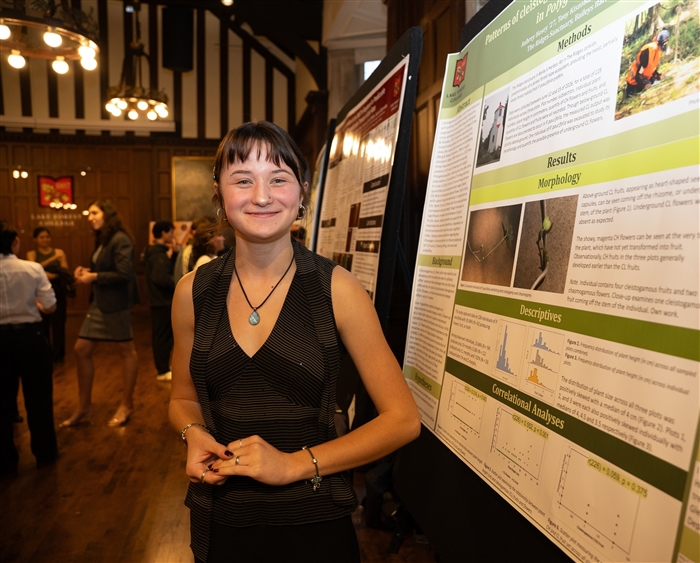
Patterns of cleistogamous and chasmogamous fruit set in Polygala paucifolia
Aubrey Hosey ‘27, Tony Kiszonas, and Victoria Holderer, The Ridges Sanctuary, Baileys Harbor, WI 54202
Cleistogamous (CL) flowers, which remain closed and self-pollinate, have evolved multiple times across angiosperms to occur along with the typical cross-pollinated chasmogamous (CH) flowers (Culley & Klooster, 2007). Researchers hypothesize why mixed- mating systems like these occur, from ideas like reproductive assurance and bet-hedging (Berg & Redbo-Torstensson, 1998) to resource allocation (Waller, 1980; Koontz et. al, 2017). Here, these hypotheses are evaluated by exploring patterns of CH and CL flowering and fruiting in Polygala paucifolia. Collecting data from three native populations of P. paucifolia at The Ridges Sanctuary in June of 2026, CH and CL fruit and flower set were quantified and compared to plant height. Overall, 35.96% of individuals produced flower, fruit, or both, with plants frequently expressing CL morphs prior to CH. Both CH and CL flowers and fruits were positively correlated with plant height, though there was no significant correlation found between CH and CL fruits alone, failing to provide any support for the reproductive assurance hypothesis. Dependency on environmental factors may also play a significant role, raising numerous questions regarding how changes in the environment can influence expression of CH and CL flowering, fruiting, and even seed viability.
Effect of Age on Same-Sex Sexual Behavior in the Black-Legged Meadow Katydid (Orchelimum nigripes)
Chante Jacobs ’271, Thalia Leon Rodriguez ‘271, Sierra Lewis ’281, Jared Swensen ’271, Jennifer A. Hamel2, Flavia Barbosa1, 1Department of Biology, Lake Forest College, Lake Forest IL, 60045, 2Department of Biology, Elon University, Elon, NC;
Same-sex sexual behavior (SSB) is widespread throughout the animal kingdom. There are numerous possible explanations for why it occurs, one of these being the mating filter hypothesis. The mating filter hypothesis explains SSB on the basis of “mating filters,” which refer to the range of stimuli that individuals will perceive as a potential receptive mate. Mating filters can broaden or narrow depending upon environmental conditions. We observed numerous same-sex mounting attempts in the black-legged meadow katydid (Orchelimum nigripes), which we hypothesized to be due to a broad mating filter. Here we tested whether age affects the frequency of SSB in O. nigripes. We hypothesized that the males’ mating filters would broaden with age as mating opportunities decrease. We collected individuals from Nicholson Wildlife Refuge (Racine Co., Wisconsin) and brought them to the laboratory where we video-recorded their behavior and recorded acoustic and vibrational signals under three treatments: with another male, with a female, and alone. Males were tested twice, at 10 days and 25 days of age post molting. The data supported our hypothesis, showing a significant increase in the percentage of trials with same-sex mounting attempts in older males.
Performance of Haptic-Enhanced Canes with Varying Sensor Configurations in Real World Navigation
Amal Khan ’28 and Frederick R Prete, Ph. D, Biology Department, Lake Forest College, Lake Forest IL 60045
Approximately 23 million blind or low-vision individuals (B/VI) use mobility canes, but traditional canes cannot detect obstacles beyond the tip. We evaluated three haptic-enhanced cane prototypes using infrared time-of-flight sensors (ToF) that triggered vibratory feedback. Six volunteers wearing sleep shades (N = 6) navigated obstacle pathways under four conditions: no haptics and three haptic canes (1-sensor, 2-sensor, 3-sensor). Performance was scored as identify detected before contact), touch/bump (contact after late detection), or collision (direct contact). Without haptics, identification was 0%. With haptics, identification increased to 98.6% (1-sensor), 79.0% (2-sensor), and 81.6% (3-sensor), with corresponding reductions in touch/collision rates. Overall, haptic feedback significantly improved obstacle detection and navigation safety, with the single forward-sensor configuration providing the most consistent performance.
Assessment of Kaposi's Sarcoma-Associated Herpesvirus (KSHV) Infection and the Inflammatory Microenvironment in Human Coronary Artery Endothelial Cells (HCAECs) and Cardiomyocytes
Zora Kleinmann ‘27, Chris Kywe, Thomas Olsen, Dr. Neelam Sharma-Walia, Department of Microbiology and Immunology, Rosalind Franklin University of Medicine and Science
Kaposi's sarcoma-associated herpesvirus (KSHV), also known as human herpesvirus 8 (HHV-8), causes several malignancies and has recently been implicated in dilated cardiomyopathy (DCM). However, the effects of KSHV infection on human coronary artery endothelial cells (HCAECs) and the associated inflammatory response remain poorly understood. We hypothesize that KSHV infection promotes a pro-inflammatory phenotype in HCAECs, contributing to the infection of the surrounding microenvironment and ultimately the onset of cardiovascular disease. We infected primary HCAECs with purified KSHV at a multiplicity of infection (MOI) of 30 after serum starvation for 2 h. We collected samples at 2, 24, and 48 hours post-infection. We used quantitative real-time RT-PCR to characterize the temporal expression of KSHV latent (ORF73, ORF71, ORF72) and lytic (ORF50, ORF45, K8.1) genes, providing insight into the kinetics of de novo KSHV infection in HCAECs. To assess changes in the inflammatory microenvironment, we analyzed conditioned media from infected and uninfected HCAECs using RayBiotech Proteome Profiler Human XL Cytokine Arrays to quantify inflammatory cytokines, angiogenic factors, and endothelial adhesion molecules. This study helped us better define the temporal pattern of KSHV latent and lytic gene expression in HCAECs and identify infection-induced changes in inflammatory signaling molecules compared with uninfected cells. These findings improve our understanding of KSHV-mediated endothelial dysfunction, and future studies may reveal mechanisms linking viral gene expression to inflammatory cardiomyopathy and other cardiovascular complications.
Characterization of ER stress pathways in a Glial-Specific Knockdown of the ER Membrane Complex Subunit 4 (EMC4) in Drosophila
Mafe Parra Lancheros ‘27, Monique Dirzo ‘26, Otoha Tatami and Dr. Rebecca Delventhal, Biology Department, Lake Forest College, Lake Forest IL 60045
The ER membrane protein complex (EMC) consists of 8-10 conserved subunits and is thought to be involved in the biogenesis of membrane proteins. Although disruption of EMC function has been associated with human diseases, the underlying molecular mechanisms affected remain poorly understood. Previous work has shown that the knockdown of EMC4 in glial cells of the fruit fly (Drosophila melanogaster) results in reduced lifespan, locomotor deficits, and protein aggregation. We hypothesize that EMC dysfunction induces ER stress which activates the unfolded protein response (UPR). To test this, we characterized changes at the transcriptional and protein levels associated with the three major signaling branches of the UPR (IRE1, PERK, and ATF6), alongside downstream cellular responses such as protein quality control, oxidative stress, and apoptosis markers in flies with a glial-specific knockdown of EMC4. We found a significant reduction in the expression of inducible Hsp70 chaperones, while constitutive Hsc70 expression remained unchanged, suggesting selective disruption of stress-responsive protein quality control. Additionally, the EMC4 knockdown was associated with changes in glutathione S-transferase D (GSTD) expression indicating alterations in oxidative stress responses. Ongoing work is exploring sex-specific differences in stress response activation. Characterizing the ER signaling pathways affected by a glial EMC4 knockdown contributes to understanding how EMC plays a role in maintaining cellular homeostasis.
Causal Analysis of Materials Extracted from Literature: Ontology-Based LLM Causal Claim Extraction
Julia Levenshteyn ‘27, Wei Chen, Sinan Keten, Materials Research Science and Engineering Center, Northwestern University, Evanston, IL 60208
This study reports the use of artificial intelligence to extract structure-property relationships from materials science literature. Materials-science publications report both causal and correlational claims. A causal claim states that changing one variable directly produces a change in another, such as raising sintering temperature causing grain growth. A correlational claim implies two variables change together, without a shared underlying cause. Typically, the claims are reported in unstructured prose that does not mechanistically distinguish between them, making it difficult to systematically synthesize findings or generate new hypotheses. We developed a framework that parses, extracts, and classifies relationships in three steps. First, journal articles are converted from PDF to text using a document-parsing tool that also faithfully extracts tables and equations. Second, potential relationships are identified using LLM (ie. ChatGPT) prompts built with examples. Third, each relationship is sorted into a five-category scheme categorizing its polarity (increase or decrease), whether it is causal or correlational, its mathematical form, any explicit equation, and any supporting table. To maintain trust in the model output, every extracted relationship remains linked to its supporting sentence. Then, to evaluate, the performance of the framework, a dataset of 224 claims was human annotated on three published materials-science papers covering polymer blend crystallization, precursor fiber properties, and grain-size effects on steel strain-hardening. To score extracted claims against the human-verified claim dataset, a reproducible matching method was implemented. The method combined approximate text matching with semantic similarity, resolved using an optimal-assignment algorithm.
Methodology for Adult Long Evan’s Organotypic Slice Culture
Ella Lubarsky ’27, Dr. Sean Schrank, and Dr. Amiel Rosenkranz, Center for Neurobiology and Stress Resilience and Psychiatric Disorders, Rosalind Franklin University of Medicine and Science
Organotypic brain slice cultures are an invaluable model for many differing fields of neurobiology. From studying the decay of cholinergic neurons in Alzheimer’s to motor circuits in the cerebellum, organotypic brain slice cultures (OBS) allow researchers to study intact cell signaling pathways with minimal animal or resource burden. However, one of the major obstacles in OBS is the inability to keep long term adult rat neurons viable. Neurons from rat pups are more resistant to metabolic damage, making them the more favorable choice for cell culture. These pup neurons, however, without undergoing any fundamental stages of development, are a more limited model compared to adult neurons. The purpose of our experiment is to optimize a methodology for adult OBS culture in order to provide a more accurate model of various neurological processes. We ran two trials of the experiment. The first used a five-week-old female Long Evans rat. The slices lasted until day 4. Trypan blue staining showed what seemed to be intact glial cells. In trial 2, the amount of growth media and plating technique of the slices were further optimized, and cell viability was seen until day 7. We found that slices are more viable if they are intact with the membrane, suggesting cell suspension is not optimal for long term growth and maintenance of pathways. Future experiments should experiment with the makeup of the artificial membranes and whether the addition of synthetic extra cellular matrix components could help slice attachment.
Impact of Sunlight Quantity on Dwarf Lake Iris (Iris lacustris) Plant Form and Ramet Arrangement
Giorgia Maran ‘28 and Tony Kiszonas, Janet McCray, The Ridges Sanctuary, Baileys Harbor WI 54202
This study investigates how sunlight quantity influences plant form (vertical or prostrate) and ramet arrangement (parallel or randomly oriented) in the dwarf lake iris (Iris lacustris), a threatened species endemic to the Great Lakes. Observations of plant form showed that leaves are nearly vertical in full sun and more horizontal in shade. Moreover, ramets in full sun appear to be arranged in seemingly parallel rows, while in shade they are more randomly oriented. The study was conducted at The Ridges Sanctuary on extant and transplanted populations of Iris lacustris. Canopy cover and PAR data were used to distinguish between the sun and shade variables. Ramet arrangement markings were transferred onto paper and translated into degree measurements with respect to true north. Plant forms of the iris were determined by comparing the leaves to a schematic representation of plant form from Makholm (1986). The results analysis shows no distinct pattern in ramet arrangement but a strong leaf form distribution for sun and shade. Ramet arrangement, more likely a morphological trait, is not likely an adaptation to optimize light capture. However, a prostrate form was linked to low light availability and a vertical form to high light availability.
Investigating Proteasome Hyperactivation as a Modifier of DPR Toxicity in Caenorhabditis elegans
Hayden McGlynn ‘29, Ira Sidhani ‘30, Jacquline Engdahl ‘27, Robert Kalb, MD, PhD, Department of Neurology, Northwestern University Feinberg School of Medicine, Chicago, IL
Amyotrophic lateral sclerosis & frontotemporal dementia (ALS-FTD) are neurodegenerative disorders frequently linked to expanded GGGGCC repeats in C9orf72. These repeat expansions can produce arginine-rich dipeptide repeat proteins (DPRs), including proline-arginine (PR50) and glycine-arginine (GR50), which disrupt cellular protein homeostasis and contribute to neuronal toxicity. The ubiquitin-proteasome system (UPS) is a central protein-quality-control pathway that removes damaged and misfolded proteins; therefore, increasing proteasome activity may offer a potential strategy to reduce DPR-associated toxicity. This ongoing project uses Caenorhabditis elegans to investigate whether a hyperactive proteasome can modify phenotypes associated with PR50 & GR50 expression. The experimental approach is to generate strains carrying both a DPR transgene and the hyperactive-proteasome genotype, then compare the phenotypes with those of DPR-expressing control animals. During the summer research period, we initiated crossing strategies to generate these combined strains. However, we did not recover the confirmed progeny carrying both traits within the available timeframe, preventing completion of the planned phenotypic analyses. This presentation describes the rationale for targeting proteasome activity in a DPR-toxicity model, the genetic-crossing strategy, and the technical challenges encountered during strain construction. Future work will optimize crossing and genotype-confirmation methods before assessing whether proteasome hyperactivation alters toxicity in vivo.
The Cicadapocalypse: A Story of Ants Dominating and Discovering Dead Bodies.
Kiera McKee1 ‘26, John Lill2, Martha Weiss3, Sean Menke1, 1Department of Biology, Lake Forest College, Lake Forest IL 60045, 2Department of Biological Sciences, George Washington University, Washington, DC 20052, 3Department of Biology, Georgetown University, Washington, DC 20057
We studied the ecosystem level effects of a massive and geographically widespread, “surprise” resource pulse on ant communities. We evaluate how ants, among the most abundant terrestrial consumer groups, respond to a 17-year periodical cicada emergence in northern Illinois through 10 weeks of data collection in each of 2 summers, at 5 different locations. This study analyzes the foraging decisions and aggressive interactions of ant genera in the presence and absence of a natural cicada resource pulse. We found that ants were 2 times slower to discover dead cicada baits during the emergence, indicating an abundance of food in the environment. Furthermore, we found that ants were 4 times less aggressive at cicada baits during the emergence compared to the following year. This indicates the resource pulse is satiating the ant community and thereby causing a reduction in interspecific competition. Previous literature notes that ants will prioritize either discovery or control of baits, exhibiting a dominance-discovery tradeoff. We analyze the variations in behavior between years among different ants genera to determine how resource abundance affects this dominance-discovery tradeoff.
Telomerase Expression is Significantly Increased During Sexual Development in Aspergillus nidulans
Shuntaro Nakamura’27, Sophia Berdnichenko’29, Garcia Natalia’29, Karen Kirk, Department of Biology, Lake Forest College, Lake Forest, IL
Telomeres are repetitive and noncoding DNA located at the ends of chromosomes that protect DNA from degradation. Telomerase, a reverse transcriptase complex that extends telomeres, is essential for replication of telomeres. However, the regulation of telomerase across microbial life cycles, particularly meiosis, is poorly understood. The purpose of this study was to determine how the gene encoding the telomerase catalytic subunit (TERT), may alter expression during developmental stages of the filamentous fungus Aspergillus nidulans, with a particular focus on sexual development. Total RNA was extracted from samples collected at distinct growth phases, and the expression level of TERT was quantified using reverse transcription quantitative PCR (RT-qPCR). Relative gene expression was normalized against the housekeeping genes GAPDH and Actin, and analyzed to assess developmental trends. Our results revealed a marked upregulation of TERT expression during sexual development compared to vegetative growth. These findings suggest that telomerase activity is developmentally regulated and may play a role in meiosis or sexual sporulation and germination. This study provides new insight into telomere maintenance and its potential role in reproductive development in filamentous fungi.
Alprazolam increases neuronal ensemble activation in the dorsal and ventral anterior cingulate cortex in male mice
Liya N’Diaye ’28, Kameron Kaplan and Dr. Holly Hunsberger, Department for Neurodegenerative Diseases and Therapeutics (CNDT), Rosalind Franklin University of Medicine and Science, North Chicago, IL 60064
Alprazolam, widely known as Xanax, is one of the most prescribed benzodiazepines (BZDs) worldwide for treating anxiety, with an estimated 12.6% of American adults reporting use, particularly among women, who receive higher rates of mental-health prescriptions. While anxiety becomes increasingly medicalized, the relief medication provides comes with a huge cognitive cost, as it is known to interrupt memory formation and contribute to cognitive impairment later in life. We previously showed that BZDs interrupt anterograde memory formation in both sexes, with decreased freezing responses in contextual fear conditioning (CFC) tasks in male and female mice; however, only female mice exhibited alterations in hippocampal neuronal ensemble activation after BZD. Here, we aimed to determine which brain regions were altered in male mice after BZD administration. We found that alprazolam-treated males showed increased engram activation in both the dorsal and ventral anterior cingulate cortex (ACC), while females showed decreased engram activation in the ventral ACC, strengthening evidence that alprazolam alters the brain in a sex-specific manner to induce anterograde amnesia.
Cutting Out the Middleman, What Could Go Wrong? The Importance of Auxilin in Clathrin-Mediated Endocytosis
Prastutee Nepal ‘28 & Hongkyun Kim, PhD. Department of Cell Biology & Anatomy, Rosalind Franklin University
Parkinson’s Disease (PD) is a neurodegenerative illness characterized by the deterioration of dopaminergic neurons in the substantia nigra. PD has been associated with genes that act as regulators for synaptic vesicle trafficking. Clathrin- mediated endocytosis is essential for the regeneration of synaptic vesicles. dnj-25 is a protein coding gene in C. elegans that produces auxilin, which is responsible for uncoating clathrin during clathrin-mediated endocytosis.
When null mutants were created, worms arrested at a late larval stage, supporting the idea that auxilin is vital in general endocytosis and nutrient uptake. Here, we sought to find where auxilin is most vital for the organism’s survival, and if there are alternate pathways that could possibly compensate for the dysfunction. We used the FRT/FLP system to generate a neuron-specific dnj-25 deletion to recapitulate some of the PD symptoms in the worms, including progressive loss of movement. These mutants were then preliminarily screened based on movement before being bleached. We selected possible suppressor mutants and ran PCR to check if the mutation interfered with the FRT-FLP sequence or was a true suppression. Movement assays were conducted on the strains that appeared as positive by isolating sets of 10 worms of every strain and filming their free movement in M9 solution. The number of thrashes made in 30 seconds were recorded, using the wildtype (N2) and the dnj-25FRT worms as controls. These strains may now be utilized to check for additional mutations that may alleviate PD symptoms.
Corticostriatal Pathways Differentially Contribute to Visual Decision-Making
Stephanie Oceguera ‘28, Youjin Lee, Eun Jung Hwang, Center for Brain Function and Repair, Rosalind Franklin University of Medicine and Science, North Chicago, IL 60064
Most decisions we make every day are not determined solely by external sensory stimuli. My summer project investigated how the brain integrates sensory information with past experience-dependent decision bias, referred to here as “history bias,” to guide choices. We hypothesized that the striatum (STR) is a site where these two sources of information are integrated. This hypothesis was based on three previous findings: first, the posterior parietal cortex (PPC) represents history bias and sends this information to the STR; second, the visual cortex (VC) processes visual information and also projects to the STR; and third, axons from the PPC and VC converge within the same region of the STR.
We predicted that disrupting information flow from VC to STR would impair stimulus-guided choices more strongly than disrupting information flow from PPC to STR. To test this prediction, we trained mice on a visual decision-making task and examined how inhibiting each pathway affected their choices. In one group, we expressed the inhibitory opsin Jaws in neurons projecting from PPC to STR, allowing us to suppress PPC-to-STR signaling with light illumination. In a second group, Jaws was expressed in neurons projecting from VC to STR.
We found that inhibiting either the PPC-to-STR or VC-to-STR pathway reduced the accuracy of choices and increased reaction times. However, the impairment in choice accuracy and reaction time was larger following inhibition of the VC-to-STR pathway. These results suggest that VC-to-STR signaling makes a strong contribution to visually guided decision-making, while PPC-to-STR signaling also contributes to accurate choice behavior. Further experiments will be needed to determine how sensory and history-related signals interact within the STR to shape decisions.
Investigating the Morphological Flexibility of Human Spatial Indexing
Kanade Osuga ’29 and Prof. Naomi Wentworth, Psychology Department, Lake Forest College, Lake Forest IL 60045
Memory retrieval is guided by various cues, one of which is spatial location. Research on “spatial indexing” shows that when retrieving information, people unconsciously look back at the place where the information was originally presented, even when that location is empty and this behavior does not improve accuracy. Moreover, this index is not tied to an absolute location: when the “location” moves between the presentation and test, gaze is still directed towards its new position, indicating a dynamically updated index.
Although this facilitative role of spatial location has been widely reported, it remains unclear whether these effects reflect indexing of an abstract location or a discrete place, given that prior studies used grids or boxes to demarcate “locations.” To examine this, we manipulated the shape of a box during its movement between auditory fact presentation and the question period: the box either changed smoothly into a circle (smooth), disappeared and reappeared as a circle (disappear), or remained unchanged (control). Fixations to the critical location, where the queried fact had previously been presented, served as a measure of spatial indexing and were analyzed for all conditions. We hypothesized that spatial indexing would be preserved in the smooth condition, as the circle would be perceived as the same object due to its spatiotemporal continuity, whereas disrupting this continuity in the disappear condition would impair spatial indexing.
Share or Steal: The Neurological Responses to Betrayal
Sadie Pimlott ‘27, Veronica Novak '28, Maeve Schilder Manning '28, Dr. Naomi Wentworth, Neuroscience Department, Lake Forest College, Lake Forest IL 60045
The P300 amplitude is an event-related potential (ERP) commonly found in the “oddball paradigm” due to its connection with unexpected stimuli. Similarly, feedback-related negativity (FRN) is another brain wave response which peaks during unforeseen, primarily negative, stimuli. Both responses can be recorded with an electroencephalogram (EEG), a technique to measure electrical responses in the brain using non-invasive electrodes on the scalp. In this experiment, we explore how the P300 and FRN change in varying social contexts using a competitive game titled Share or Steal. Share or Steal challenges players to decide whether to “share” or “steal” from a fellow player. If both choose to share, they equally share the profit. However, if a player chooses to steal while the other shares, the stealing player pockets all the money. This game creates an interesting decision-making task while additionally allowing manipulation of unique social contexts. In this experiment, we investigate how these varying social contexts enhance P300 and FRN amplitudes using an electroencephalogram.
Molecular Toxicity Assessment of Parkinson’s Disease-associated V15A Alpha-Synuclein Mutant in a Yeast Model
Jagadambica Pinapala ‘28, Ash Peacock ‘28, Shanamon Chandavimol ’27, and Shubhik DebBurman
Neuroscience Department, Lake Forest College, Lake Forest, IL 60045
Parkinson’s Disease (PD), the most common human synucleinopathy, is linked with the selective death of midbrain dopaminergic neurons and the formation of Lewy Bodies within them. These Lewy bodies are largely composed of the misfolded and aggregated protein, a-synuclein. Several point mutations in α-synuclein cause early-onset forms of PD, including the recently discovered, but understudied V15A mutation. Here, we have characterized the V15A mutant using our well-established budding yeast (S. cerevisiae) model. First, we assessed V15A expression, localization, and toxicity in yeast and found that this mutant forms aggregates and makes yeast moderately toxic, but to a lesser extent than wildtype synuclein. We then assessed whether the loss of valine (V) or the gain of the alanine (A) drives this mutant’s toxicity. When we substituted polar (Q), acidic (D), or hydrophobic (G, F) amino acids at this location, we observed that the hydrophobic substitutions differentially regulated α-synuclein toxicity. An expanded analysis of a larger range of hydrophobic substitutions (G, A, C, M, V, I, L, F) showed that increased aggregation and toxicity of α-synuclein was linked to higher hydrophobicity at this location, explaining why the wildtype α-synuclein is more toxic to yeast than V15A. Next, we assessed the impact of several human synucleinopathy-linked conditions on V15A toxicity using genetically altered yeast strains. Elevated nitrative stress (cox5aD) and disrupted autophagy (atg11D) increased V15A toxicity, while reducing oleic acid (ole1D) inhibited V15A toxicity. We also assessed the effects of altering known a-synuclein post-translational modifications (acetylation, SUMOylation, phosphorylation) on the toxicity of V15A. We found that blocking acetylation and phosphorylation increased the toxicity of V15A. Finally, we assessed the combinatorial impact of two other closely located familial mutations (G14R and A18T) on the V15A mutant and found that the G14R mutant was the toxic of the three. When combined with V15A or A18T mutants, it increased their toxicity. Surprisingly, the V15A/A18T mutant was nontoxic, but the triple mutant (G14R/V15A/A18T) was just as toxic as A18T alone. Together, our findings identify several factors that impact V15A mutant toxicity and support the notion that the 14-18aa stretch within α-synuclein may represent a structural hotspot regulating the protein’s overall neurodegenerative potential.
Total Synthesis of Chaetoxanthone C
Utopia Pasika ‘27, Anthony Polyovy ‘26, Silas Tooth ‘27, Dr. Paul Gladen, Department of Chemistry, Lake Forest College, Lake Forest, IL 60045.
The chaetoxanthones are small family of xanthone natural products produced by the marine fungus Chaetomium sp. The chaetoxanthones have demonstrated antimicrobial properties including activity against Trypanosoma cruzi (IC 50 1.5 µg/mL). Herein, we report the total synthesis of Chaetoxanthone C. Key reactions include a scandium triflate catalyzed electrophilic aromatic substitution reaction to append the tetrahydropyran ring moiety to the xanthone core, and an aromatic chlorination reaction utilizing a novel reagent combination of N-chlorosuccinimide and scandium triflate. The synthesis was completed in six total steps, with five steps in the longest linear sequence. Synthetic access to chaetoxanthone C will enable further exploration of the antimicrobial biological activity.
Examining the Relationship Between DEn and BLA Cellular Activity During Fear Memory Retrieval
Mariela Ramos ’27, Rachel Parker, & Nicole Ferrara, Center for Neurobiology of Stress Resilience and Psychiatric Disorders, Department of Physiology and Biophysics, Rosalind Franklin University of Medicine and Science, North Chicago, IL 60064
The basolateral amygdala (BLA) is a core component of the limbic system and is essential for fearful memory processes. While the BLA’s role in fear regulation is well studied, the function of the dorsal endopiriform nucleus (DEn), a specialized association area with extensive bidirectional connections to limbic structures, remains less understood. This project investigated the relationship between cellular activity in the DEn and BLA and the expression of fear-related behavior. To do so, adult male and female rats underwent fear conditioning and were assigned to one of two groups: a No Retrieval group that was fear-conditioned but did not undergo memory retrieval, and a Retrieval group that was also fear-conditioned and then had memory retrieval. In these rats, we quantified cellular activation in the BLA and DEn using immunofluorescence for zif268. Our findings demonstrate that fear retrieval significantly activates both the BLA and DEn. Furthermore, correlation analyses revealed that DEn activity modestly negatively associates with the degree of fear expression, suggesting that DEn activation may contribute to reductions in fear. These results support the hypothesis that the DEn- BLA pathway plays a critical role in the neural regulation of fear, providing a novel framework for the contribution of these circuits to fear-based disorders, such as anxiety or posttraumatic stress disorder.
From Theory to Modeling: How Does Uncertainty in CO2 Fertilization Effect Influence Climate Projections
Izzah Shah ‘29, Sofia Vinnik ‘29, Dr. Joseph K Brown, Biology Department, Lake Forest College, Lake Forest IL 60045
Human activities are increasing atmospheric CO2, while plants remove some of that carbon through photosynthesis and store it in vegetation and soils, this pathway depends on many factors. One factor is the CO2 fertilization effect (β), whereby plant photosynthesis increases as atmospheric CO2 levels rise. Because the true value of β is uncertain it may affect projections of carbon storage, atmospheric CO2, and future warming. This uncertainty can be modeled using the Hector simple climate model. We investigated how uncertainty in β affects future carbon cycle and climate projections, with a focus on how low, middle, and high β values influence late-century outcomes. We used Hector and Matilda to simulate climate carbon-cycle changes until 2100. We tested 1000 β values with all other variables held constant. We grouped β values into categories and compared carbon-cycle and climate projections across these categories. We found β uncertainty caused projections to diverge significantly by 2100 across all carbon and climate variables. This spread grew continuously through the late century, showing that uncertainty in plant biology compounds over time. We also found a large end of century warming difference between low and high β projections (2.16 °C and 2.50 °C, respectively). Overall, our findings revealed that when plant growth responds strongly to rising CO2, late century warming was reduced by about 0.34 °C on average. This work shows that it is important to consider the uncertainty in global plant response to rising CO2 because there is a direct effect on end of century warming.
Late-Onset Exhaustion Marker Expression with Subset-Specific Cytokine Kinetics in Th17b and pTh17 Cells
Anastasia Siz ‘26, L.P. Adhikari, Kristen Patterson, and Dr. Joseph Reynolds, Department of Cancer Cell Biology, Immunology, and Infection, Rosalind Franklin University of Medicine and Science, North Chicago, IL 60064
Th17 cells mediate host defense at barrier surfaces such as the intestinal mucosa and skin. The lineage is heterogeneous, and functionally distinct subsets may differ in their susceptibility to exhaustion, a loss of effector capacity associated with sustained inhibitory receptor expression. Th17b and pathogenic Th17 (pTh17) cells are phenotypically similar but may not follow the same exhaustion kinetics. Murine CD4+ T cells were polarized in vitro toward Th17b and pTh17 phenotypes and sampled daily over five days. Flow cytometry was used to quantify the inhibitory receptors PD-1 and Lag3, alone and in combination, alongside the effector cytokines IL-17A, IFN-γ, and GM-CSF. Both subsets maintained low inhibitory receptor expression through the early culture period, followed by a pronounced increase at Day 5, indicating that exhaustion marker acquisition occurs abruptly rather than progressively. pTh17 cells displayed a modestly higher frequency of PD-1+Lag3+ double-positive cells, and Lag3 single-positive frequencies trended higher in pTh17 cells from Day 2 onward. Cytokine production diverged: IL-17A increased steadily in Th17b cultures but declined before a late recovery in pTh17 cultures, whereas IFN-γ and GM-CSF remained low in both without a consistent trend. These results suggest that the two subsets converge on a comparable exhaustion phenotype through distinct kinetic routes. Future work will extend the culture period to determine whether the convergence observed at Day 5 persists and whether the subset-specific IL-17A kinetics reflect stable differences in effector stability.
Inhibition of Neprilysin Increases Amyloid-β Levels as a Novel Therapeutic Approach to Traumatic Brain Injury
Maaz Suglatwala ‘29, Sonia Arora, and Dr. Robert Marr, Center for Neurodegenerative Diseases and Therapeutics, Rosalind Franklin University of Medicine and Science, North Chicago, IL 60045
Traumatic brain injury (TBI) is a major risk factor for Alzheimer's disease. Most modern Alzheimer's therapies target reduction of amyloid-beta (Aβ), conventionally thought to drive disease progression. However, emerging evidence suggests that elevated Aβ following TBI may improve outcomes. To investigate this, we inhibited neprilysin, a key Aβ-degrading enzyme, to elevate Aβ levels in a TBI model. Neprilysin inhibitor was administered intranasally following impact, and motor and cognitive function were assessed using standard behavioral tests. Immunological assays of dissected brain tissue confirmed elevated levels of Aβ40 in treated mice, while the effects on Aβ42 remain to be determined. Neprilysin inhibition significantly improved motor coordination and motor learning, while no improvement was observed across other measures of cognitive function. These results suggest Aβ's role following TBI may be more nuanced than previously thought, with effects that differ by cognitive domain. Further investigation into the mechanisms by which neprilysin inhibition may differentially influence motor and cognitive function could provide insight into its role following TBI and inform the development of more targeted therapeutic strategies for TBI and Alzheimer’s disease.
Modeling Glutamate Excitotoxicity in Differentiated N2a Neuroblastoma Cells
Tamara Viquez’ 28, Jasmine Kohl and D. Blaine Moore, Neuroscience Department, Lake Forest College, Lake Forest, IL 60045
Glutamate is the major central nervous system excitatory neurotransmitter and a key regulator of learning, memory, and overall brain function. Excessive glutamate release following acute brain injury, however, can trigger excitotoxic cell death. To model excitotoxicity in vitro, we sought to establish for the first time in our laboratory a protocol for growing and differentiating the neuron- like Neuro2a (N2a) cell line. We also wanted to establish the timing and conditions for transfection of N2a cells. Undifferentiated Neuro2a cells were grown in culture afnd then transfected with GFP. Expression was robust with 2 mg cDNA before initiation of the differentiation protocol. Following transfection, 10 mM Retinoic Acid (RA) was added into the culture media for five days, which produced sufficient differentiation from tumor morphology to neuron-like morphology. We next determined concentrations of glutamate required to achieve 50% neurotoxicity. Differentiated cultures were exposed to a range of glutamate concentrations from 0 mM to 250 mM and incubated for 24 hours. Cell viability was measured using the MTT assay and quantified with a one-way ANOVA followed by Tukey’s post hoc test. 25 mM and 50 mM of glutamate produced minimal excitotoxicity; 75 mM resulted in approximately 50% toxicity, while 150 mM and 250 mM produced high levels of neuronal cell death. As such, we met our goal of establishing the N2a model system in the laboratory and differentiating transfected cells. This pilot work will guide our next steps, which focus on expressing the 5HT-2B serotonin receptor variant and testing organic compounds that selectively antagonize this known regulator of glutamate release.
Measuring Telomerase RNA Expression Throughout the Lifecycle of 2 Model Organisms
Roney Wells ‘28, Eva Mannsbart ‘28, and Dr. Kirk, Biochemistry and Molecular Biology Department, Lake Forest College, Lake Forest, 60045
Telomeres, composed of repetitive non-coding DNA at chromosomal ends, protect against sequence loss during replication. Telomerase is the enzyme that synthesizes telomeres. It consists of two components: TERT (telomerase reverse transcriptase), the catalytic protein subunit, and TER (telomerase RNA), which provides the template for the addition of telomeric repeats. The Kirk lab is investigating TER expression across the life cycles of the filamentous fungus Aspergillus nidulans and the ciliate Tetrahymena thermophila, primarily using RT-qPCR. However, conventional primers produced amplification in no-RT controls, indicating genomic DNA (gDNA) contamination. Because TER is a single-exon gene in both organisms, exon-exon junction primers cannot be used to avoid this. To overcome this, the lab is using Gene-Specific Tagged RT-qPCR, which adds an artificial, non-genomic tag (TAG) to the 5' end of the reverse transcription primer. PCR primers are then designed to be complementary to this tag, so only tagged cDNA is amplified, while gDNA, which lacks the tag, is not. This design eliminates gDNA contamination and facilitates the analysis of TER expression across developmental stages, expanding our understanding of telomerase regulation in A. nidulans and T. thermophila.
The role of the ACC-PPC inhibitory control over alcohol seeking
Keisha William1,2 ’27, and Hannah Carlson, Ph.D.1,2, 1Department of Neuroscience, Lake Forest College, Lake Forest IL 60045, 2Department of Psychology, Lake Forest College, Lake Forest IL 60045
Alcohol use disorder (AUD) involves persistent alcohol use despite negative outcomes, due to impaired inhibitory control and decision-making. Impulsivity has been identified as both a vulnerability factor for substance use disorders and a consequence of prolonged alcohol exposure. Although prior studies have investigated the role of the projection from the posterior parietal cortex (PPC) to the anterior cingulate cortex (ACC) in decision-making, few have examined the unique role this circuit may play in substance use. The present study is designed to assess the potential reciprocal relationship between impulsive behavior and alcohol use, with a focus on the ACC-PPC pathway. To investigate the role of ACC–PPC circuitry in alcohol-related impairments in inhibitory control, three complementary experiments were conducted in male Long-Evans rats. Experiment 1 verifies anatomical connectivity between the anterior cingulate cortex (ACC) and posterior parietal cortex (PPC) using viral tracing (n = 6). Experiment 2 examines the effects of chronic alcohol exposure on inhibitory control and neural activity within the ACC and PPC by comparing C-Fos expression in the ACC and PPC and behavioral performance between rats trained on a sucrose-reinforced Go/No-Go task and given intermittent access to alcohol (n=4) or sucrose (n=4) in the home cage. Experiment 3 evaluates the causal role of the ACC–PPC projection in inhibitory control during alcohol self-administration, using in vivo chemogenetics to selectively manipulate ACC-PPC function during behavior. Taken together, these data elucidate the reciprocal relationship between frontoparietal activity and impulsive behavior in the context of alcohol self-administration
Behavioral mechanisms underlying social decision-making: Investigating dictator game behavior in a novel rodent model.
Taim Yaghi ‘29, Anthony Polonsky, Keisha William, Avery Huffman, Lettia Hoda, Shahrbanu Elmi, Paul Henne, Ph.D., and Hannah Carlson, Ph.D., Departments of Psychology, Neuroscience, and Philosophy, Lake Forest College, Lake Forest, IL 60045
The dictator game is an experimental model employed in social psychology and economics to examine situations in which self-interest and fairness are opposed. The game involves a decider and a partner, where the decider can choose to alter a default reward allocation or accept it through inaction. Research in humans has indicated that individuals are more likely to make the selfish choice when the default favors them (where inaction accepts the default) than when the default is initially even and altering it would require action. The elucidation of the neural and behavioral mechanisms involved in social decision making requires the development of translational models that can capture analogous dimensions of human and non-human behavior. Comparable studies in chimpanzees further indicate that prosocial behavior is not a unique human capacity, but the ability of other mammals to engage in this task has not yet been assessed. To address this, we adapted the dictator game for rodents using a customized double operant chamber. Decider rats learn to press levers to either accept or interrupt default food reward allocations distributed between themselves and a partner rat across varying levels of partner familiarity. Ultimately, this procedure aimed towards establishing a rodent model to explore the environmental and neurobiological mechanisms underlying prosocial and selfish choices. Overall, we found that there are limitations in standard rodent learning paradigms, which restricted progression into advanced dictator game modules. Consequently, our research highlights critical bottlenecks in learning theory and establishes a necessary procedural baseline for future rodent models of social decision-making.
Examining The Effects of Concurrent Teacher and Student Mindset Interventions: Testing a “Double-Dose” Hypothesis
Elayne Vollman, Mariia Machalina ‘27, Maria Charlet ‘30, Jackson Rothman, Nicole Golden, Maggie Fields, Sarah Tahir, Ena Sehic
Department of Psychology, Lake Forest College, Illinois
Prior research has demonstrated that growth mindset interventions can positively influence students’ motivation, engagement, and academic achievement, while teachers’ own mindsets can shape students’ beliefs about learning and their academic experiences. However, less is known about how the classroom context affects students’ responses to these interventions. The mindset-plus-supportive-context hypothesis suggests that growth mindset interventions are most effective when students are in environments that reinforce the belief that abilities can develop through effort, effective strategies, and support (Yeager et al., 2022). Teachers play an important role in creating these environments through their beliefs, interactions, and instructional practices. Understanding this relationship is particularly important in educational settings where students may experience unequal access to supportive learning environments.
The present research examines how growth and fixed mindsets interventions relate to students’ mathematics achievement, perceptions of teacher respect, and classroom culture. Using a research-practice partnership model, the study was conducted in a middle school serving primary low-income students from immigrant families from Mexico and Central America. Forty-three teachers completed professional development modules focused on growth mindset principles and supportive instructional practices. Approximately 600 students were randomly assigned within classroom to either a growth mindset intervention or a metacognitive understanding intervention. Students' outcomes were compared across conditions to examine whether the growth mindset intervention was associated with differences in mathematical achievement, students’ perception of teacher respect, and classroom culture. Together, these outcomes provide a broader understanding of how mindset-related interventions may influence both academic performance and students’ classroom experiences.