

The Department of Physics at Lake Forest College offers students the opportunity to participate in summer research projects that extend learning beyond the classroom.
 Under the guidance of faculty mentors, students engage in hands-on investigations that develop technical skills, foster critical thinking, and encourage collaboration. This experience allows students to explore innovative ideas, deepen their understanding of physics, and prepare for future academic or professional pursuits.
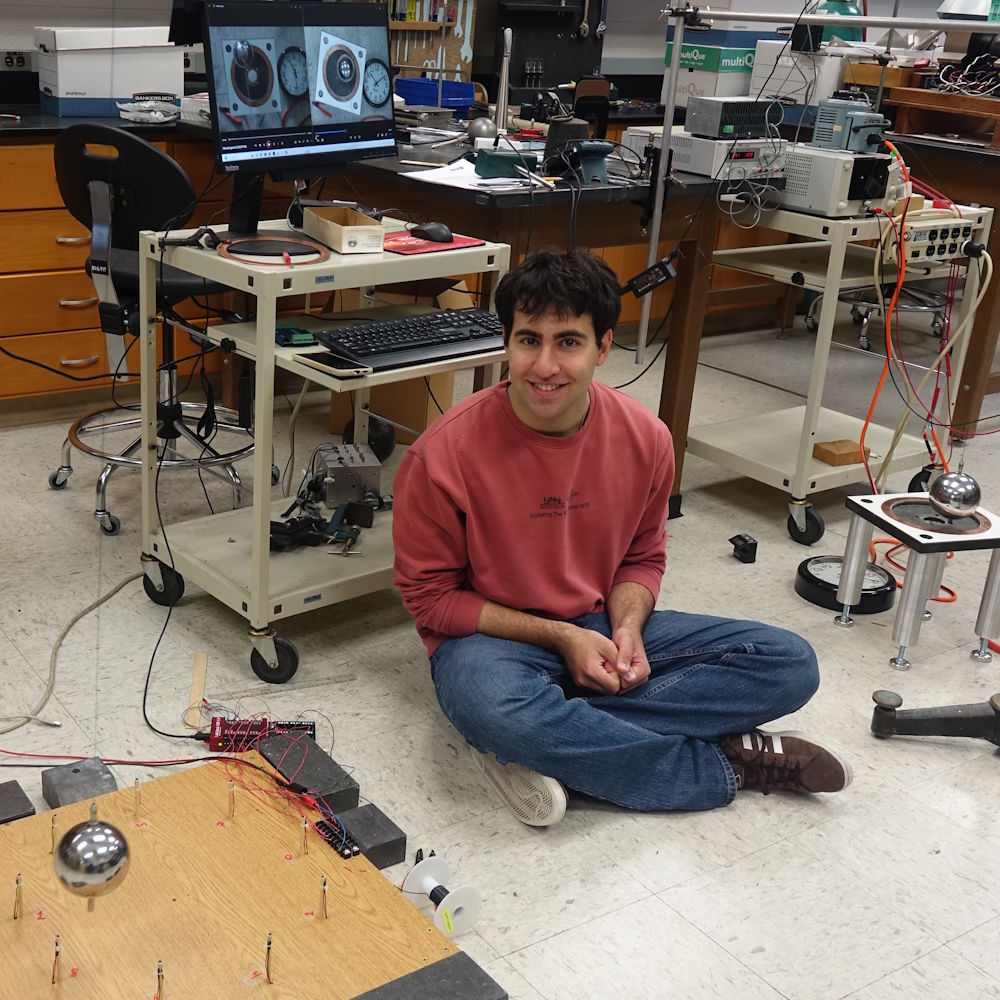
Van Baghdasaryan
Research Topic: Foucault Pendulum
Supervisor: Professor Michael Kash
Built a Foucault Pendulum. The plane of such a pendulum rotates because the Earth turns beneath it. The goal was to measure the rotation rate precisely. The pendulum was driven so data could be collected for many days. Van worked with a microcontroller and a stepper motor to track the rotation of the pendulum.
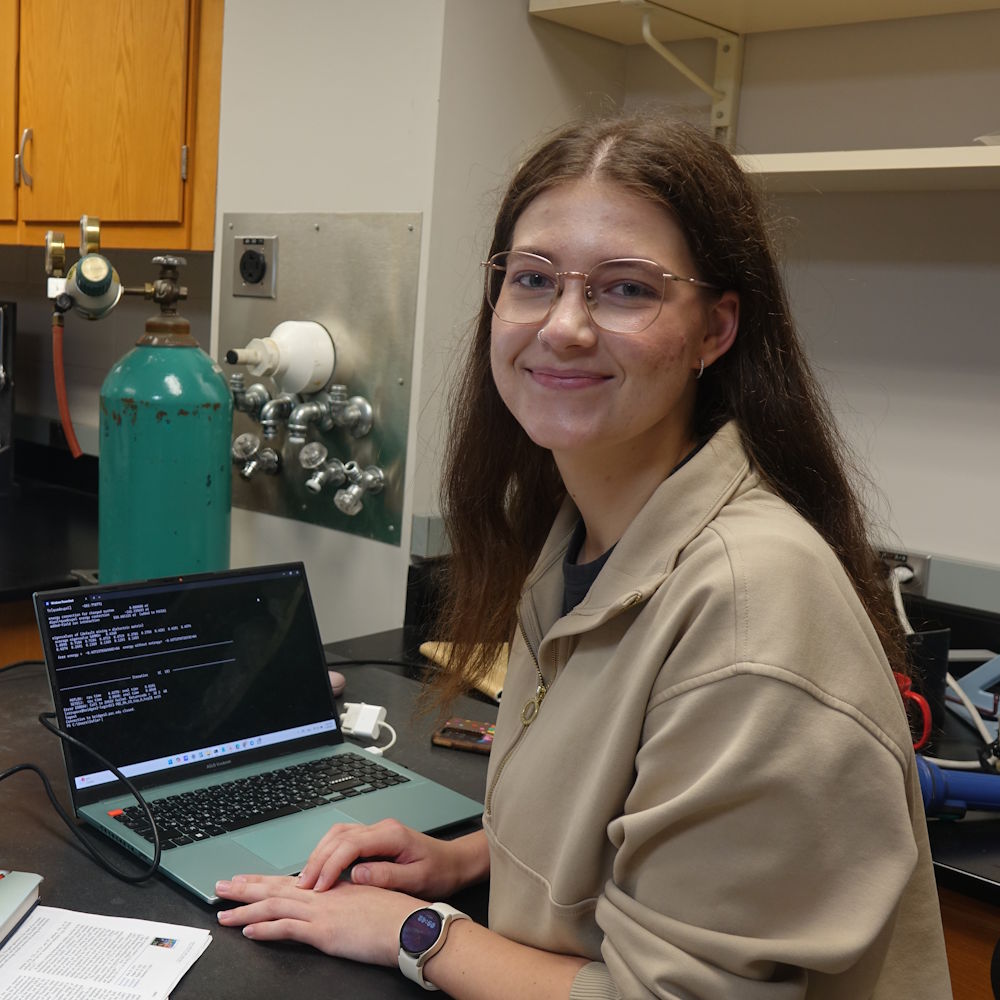
Sofia Strupovets
Research Topic: Applications of Density Functional Theory in Modeling Surfaces
Supervisor: Professor Veronika Walkosz
Studying adsorption of CO on metal surfaces using Density Functional Theory with the goal of elucidating surface-adsorbate interactions relevant to heterogeneous catalytic processes such as CO₂ decomposition and CO oxidation.
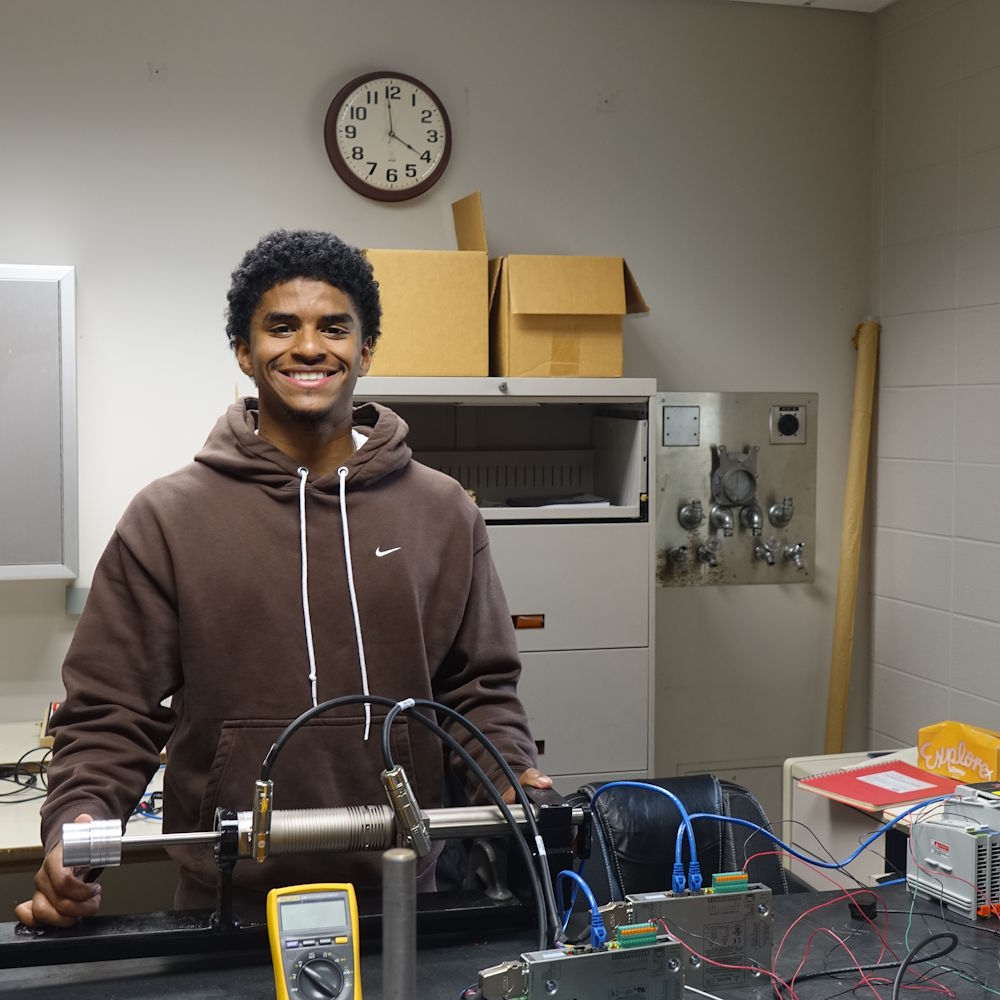
Elijah Bull
Research Topic : Industrial Automation
Supervisor: Professor Nathan Mueggenburg
Studying industrial automation systems. Programming precise control of a LinMot linear/rotary motor using Studio 5000.
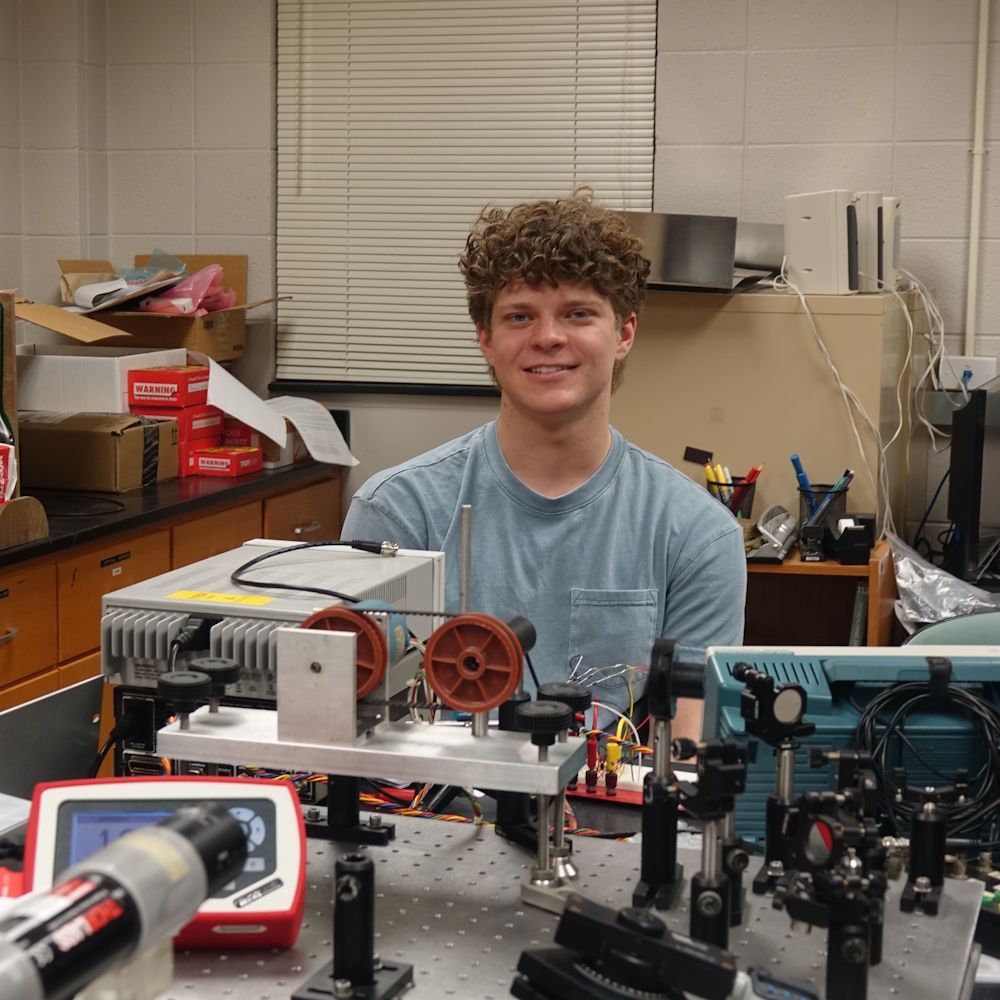
Clayton Berg
Research Topic: Electromagnetically Induced Transparency in Lithium
Supervisor: Professor Michael Kash
Investigated Electromagnetically Induced Transparency in an atomic beam. The beam was a gas of lithium atoms travelling in the same direction. The atoms were excited by a laser. Clayton learned about vacuum technology for the beam and LabVIEW software to analyze the properties of the laser beam.
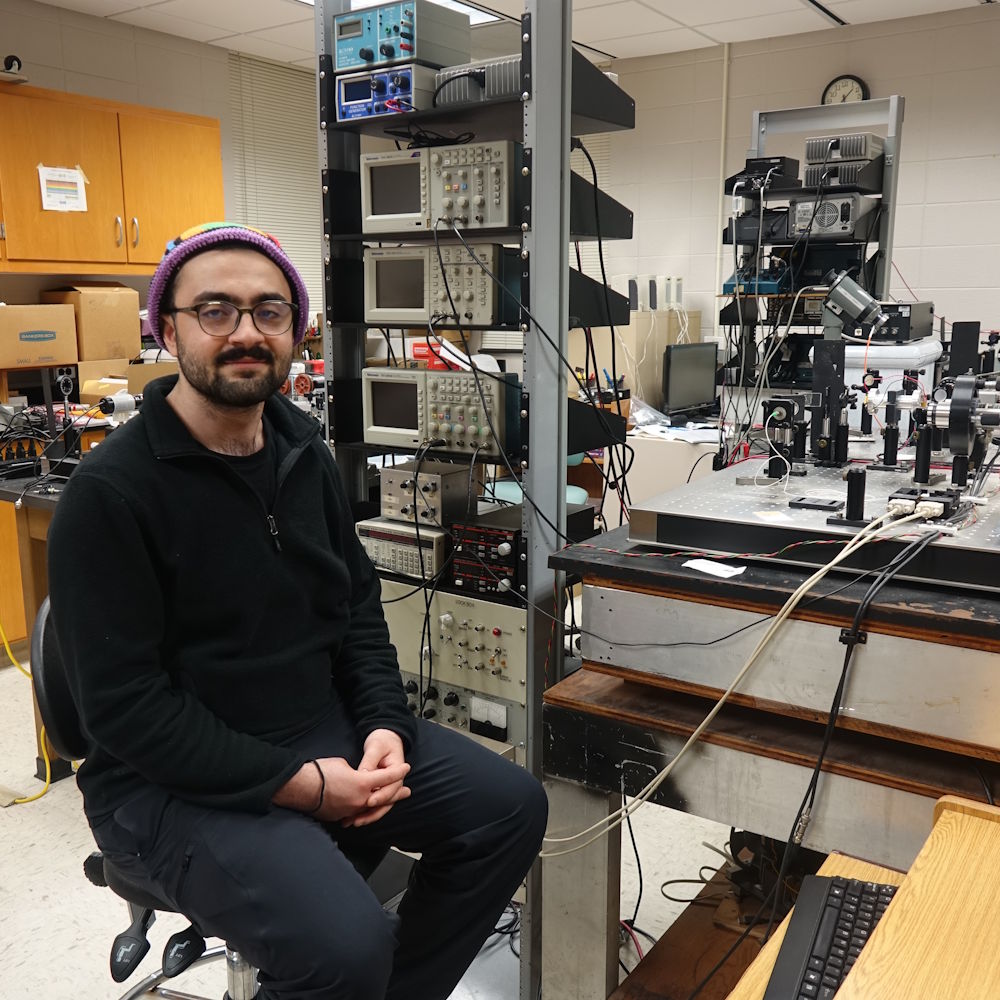
Mahmood Alwash
Research Topic: Electromagnetically Induced Transparency in Radium
Supervisor: Professor Michael Kash
Electromagnetic Induced Transparency in a vapor cell. The cell contained a dilute gas of rubidium atoms that were excited by a laser. Mahmood employed special optical components to make the light have a polarization that would interact weakly with the atoms.
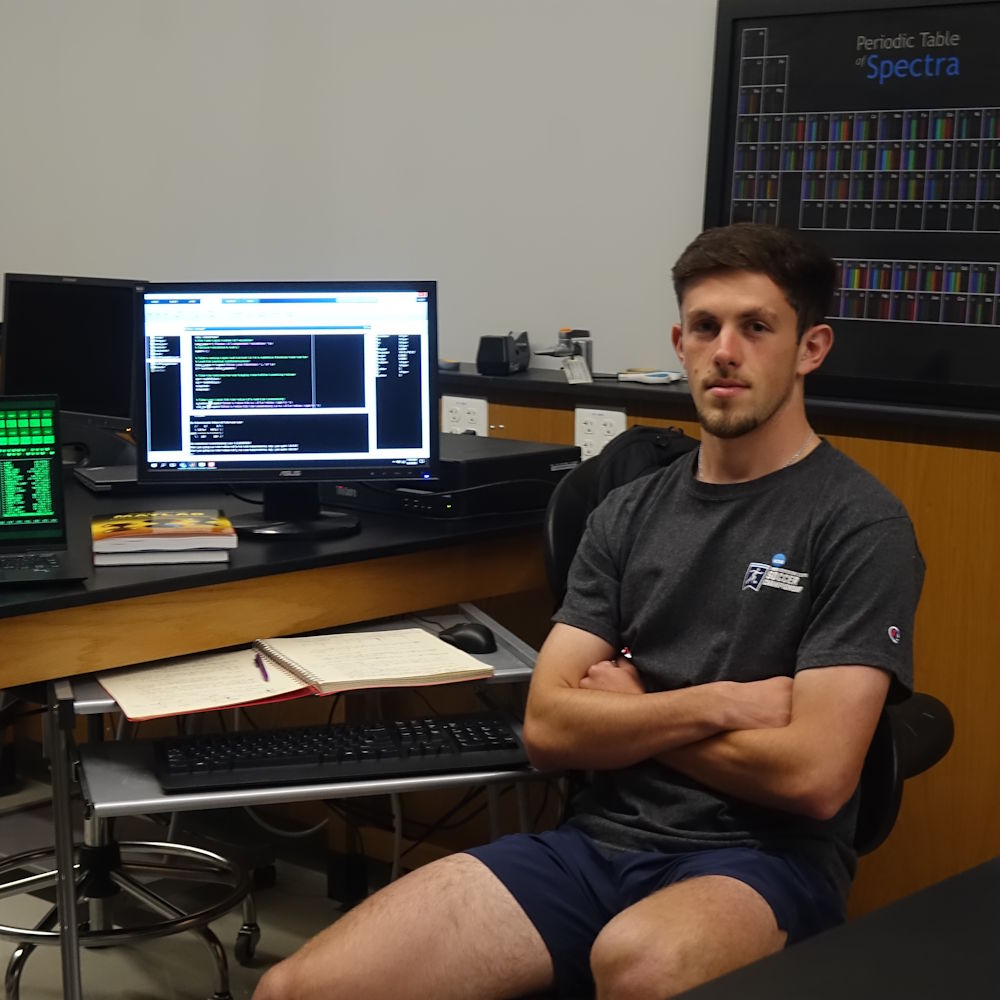
Peter Cirbo
Research Topic: Schlieren Optics and MATLAB Projects
Supervisor: Professor Nathan Mueggenburg
Designing and testing an instructional lab on Schlieren optics and writing error propagation and data analysis code in MatLab.