
November 13, 2026
Linda Blaser
Meneses and Park bring Argentine film scholarship to international audience
A book about Argentine cinema published by Lake Forest College faculty has taken on a new life in an unexpected way: helping bring an acclaimed Argentine film to a new international audience.
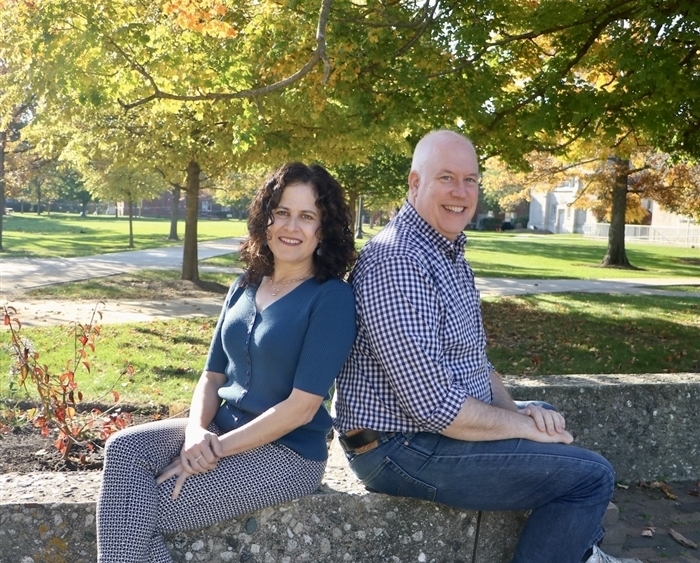
Professor of Spanish and Latin American Studies Gizella Meneses and Professor of Communication Dave Park recently collaborated on an audio commentary for The Secret in Their Eyes, the Oscar-winning and Goya Award-winning Argentine film featured in a new 4K UHD and Blu-ray release from United Kingdom-based Second Sight Films.
The invitation came from Phil Escott, Second Sight’s head of production, after he encountered Argentine Cinema: From Noir to Neo-Noir, a 2018 book Meneses co-authored with Professor Emeritus of Spanish and Portuguese David George. The book explores the development of film noir and neo-noir in Argentina, including an in-depth chapter on The Secret in Their Eyes.
At first, Meneses wasn’t entirely convinced the invitation was legitimate.
“When I got the request, I was like, ‘OK, is this a phishing scam?’” she recalled. After looking into the production company and speaking with its director, she realized the opportunity was very real. “Providing film commentary was not on my bucket list. But it was a really nice surprise.”
Released in 2009, The Secret in Their Eyes follows a retired court investigator revisiting a decades-old murder case as he writes a novel about the investigation. Blending crime drama, romance, and Argentina's political history, the film won the Academy Award for Best Foreign Language Film.

For Meneses and Park, the commentary offered an opportunity to review the film from the perspective of their own areas of expertise while sharing their insights with audiences beyond the academic world. Their contribution appears alongside a separate commentary by director Juan José Campanella and new interviews with the director, producers, and composers.
“Providing film commentary was not on my bucket list. But it was a really nice surprise.”
The experience also gave the professors room to have some fun with the material. The producer encouraged them not to approach the commentary as a formal academic lecture, Meneses said, but to be conversational and bring in outside references.
“There’s so much to unpack,” she said. “The improvisation part of it was great. It’s a wonderful film.”
That didn’t mean leaving the scholarship behind. The two discussed the film’s visual storytelling, camera angles, editing, and the dramatic lighting techniques associated with film noir, including chiaroscuro. But the less formal format allowed them to follow their curiosity and explore the film in a different way.
*** Placeholder for comment from Dave Park ***
From scholarly research to the international stage
The project also brought Meneses back to a film she first explored in depth with George nearly a decade ago. Their book was among the first scholarly studies devoted specifically to Argentine film noir, examining how the genre evolved in Argentina while reflecting the country’s cultural and political history.
When the book was published in 2018, Meneses had another memorable encounter connected to the film: she met its star, Ricardo Darín, when he visited Chicago to promote another film at an international film festival. She gave him a copy of the book, which analyzes three films in which he appears.
The new Second Sight release, scheduled for Nov. 23, extends that scholarship even further. The limited-edition collection also includes a 120-page book featuring new essays by film scholars and critics, placing Meneses and Park’s contribution within a broader international conversation about the film and Argentine cinema.